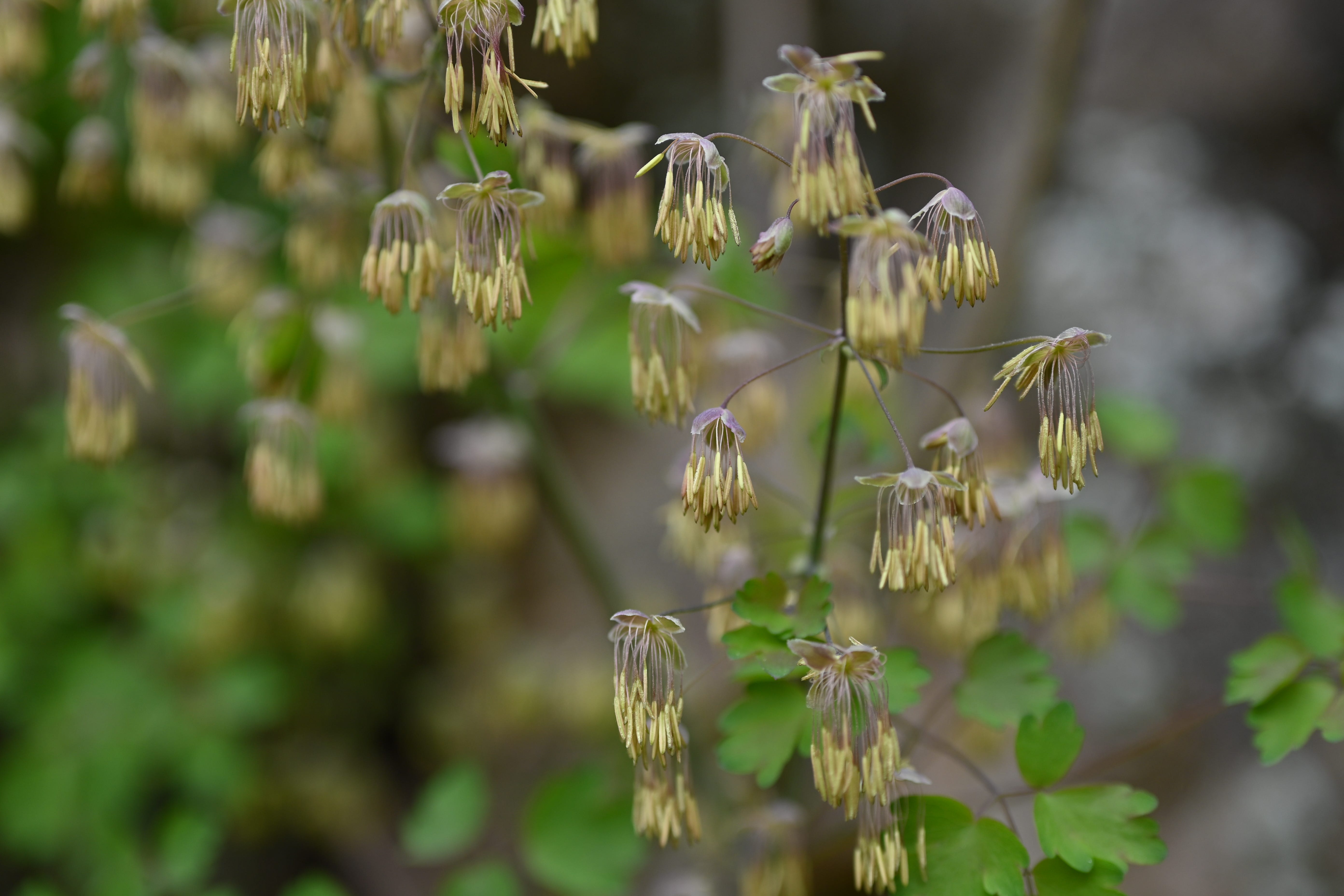
Early Meadow Rue
Thalictrum dioicum

You’ve probably walked past Early Meadow Rue hundreds of times, unaware of the delightful, teensy flowers blooming at your feet. But get up close with them, and a fascinating story unfolds.
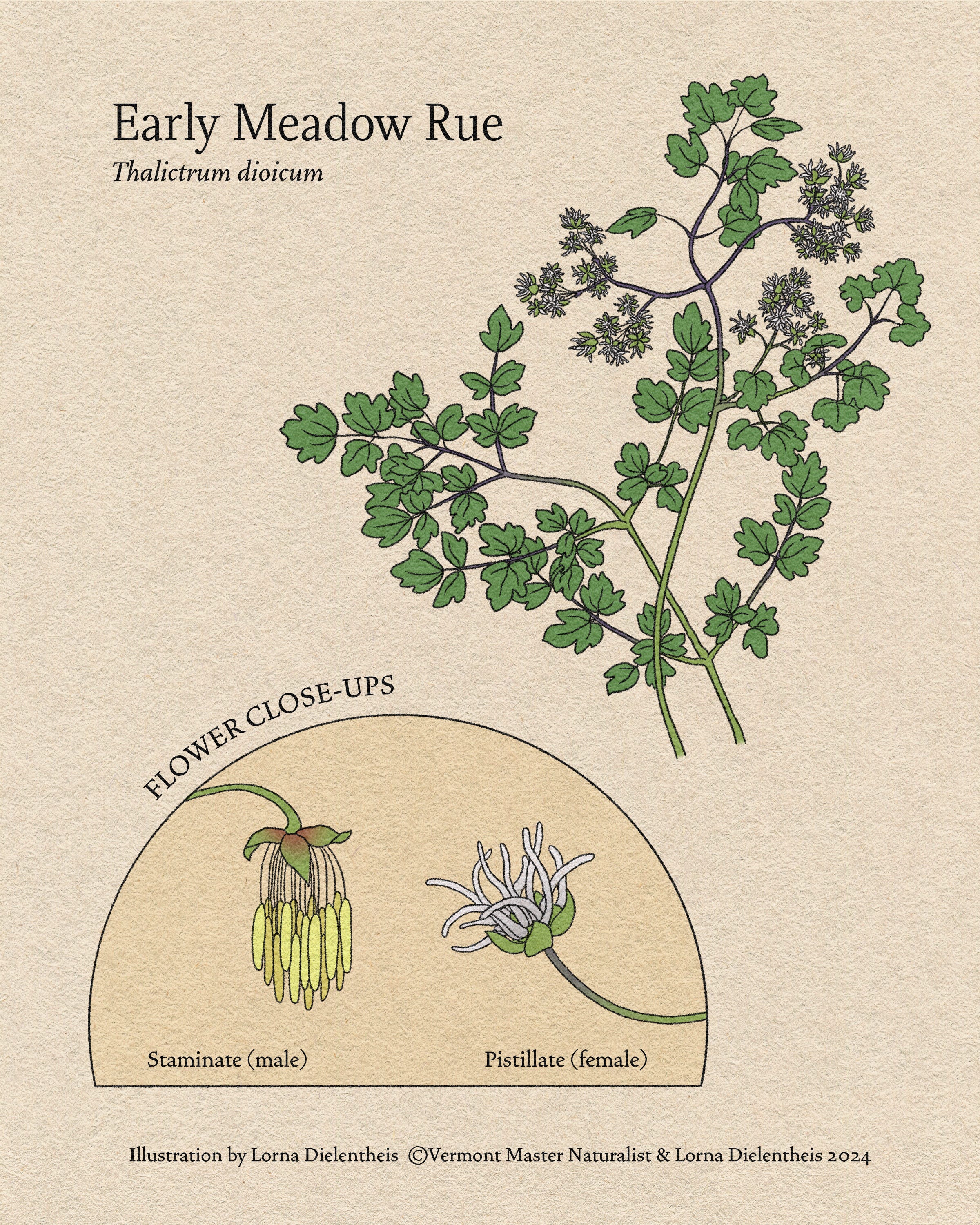
Most angiosperms have perfect flowers, which are also referred to as homoecious, bisexual, or hermaphroditic. This just means that each flower has both male and female reproductive parts. The male parts are called stamens, and the female parts are called pistils. Because bisexual flowers have both pistils and stamens, they can produce pollen and be pollinated to form fruit/seeds. Like I said, this is how most flowering plants operate.
A small percent of flowering plants do not follow this convention, however, and Early Meadow Rue is one of them. Early Meadow Rue’s flowers are either male or female (unisexual), and additionally, the male and female flowers occur on separate plants. Species that exhibit these characteristics are called dioecious. Sounds a little similar to their species name, right? Well, dioicum is a latin word derived from Ancient Greek, meaning "of two houses."
A flowering plant can also have unisexual flowers that occur on the same plant— that would be called monoecious.
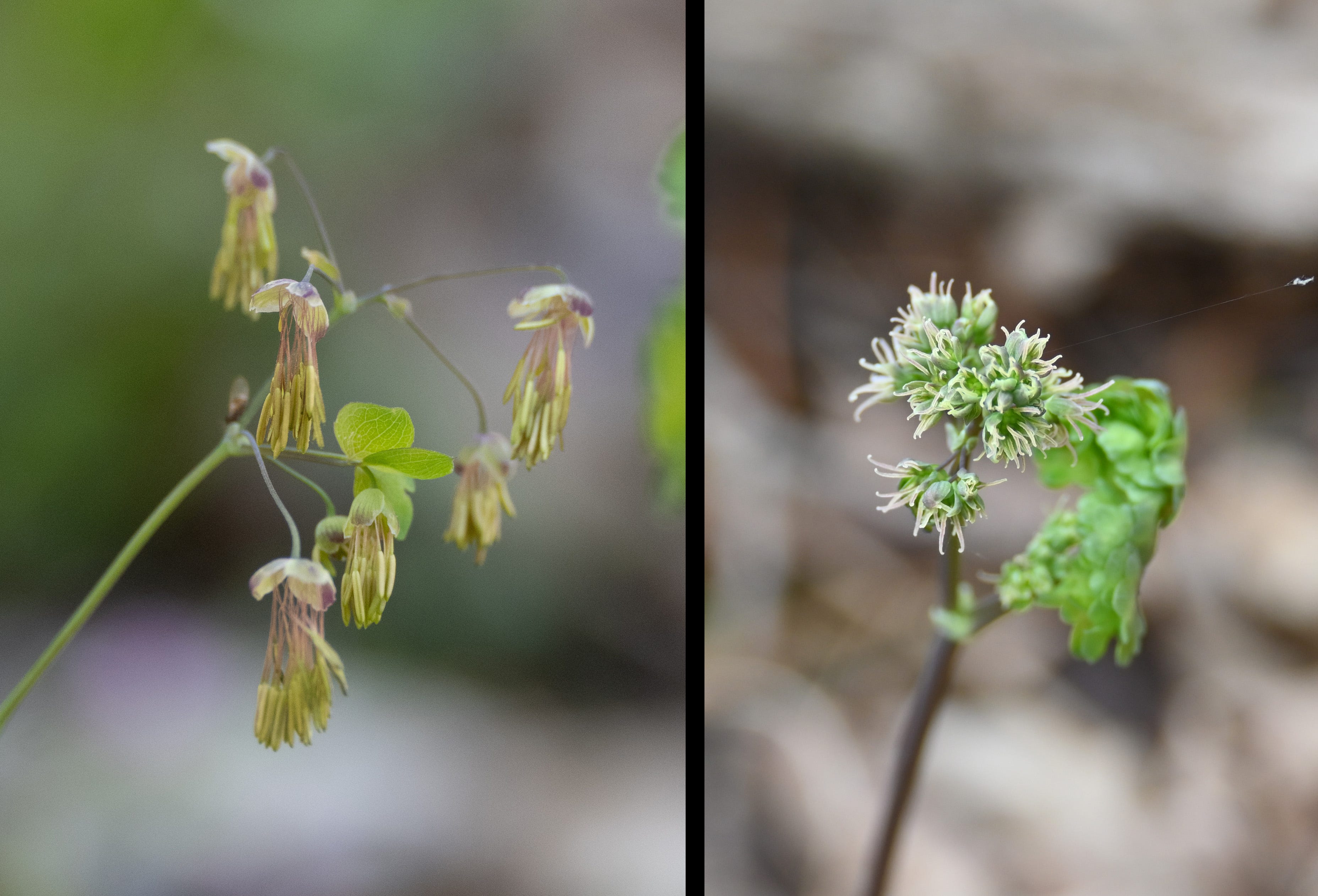
Generally, an angiosperm species will exhibit one of these three flower structures. Like I mentioned, most are homoecious (85-90% of angiosperms), with a few monoecious (7-10% of angiosperms), and even fewer dioecious (6% of angiosperms).
But like all things in nature, there are exceptions. Red and silver maples, for example, can be dioecious or homoecious, depending on age and other unknown factors. Check out Bryan Pfeiffer’s essay First in Flower for more on that. And for another spring ephemeral that subverts the norm, read my investigative piece on Jack-in-the-Pulpit.
I hope I haven’t lost you with all the technical jargon about plant parts. Let’s get back to Early Meadow Rue.
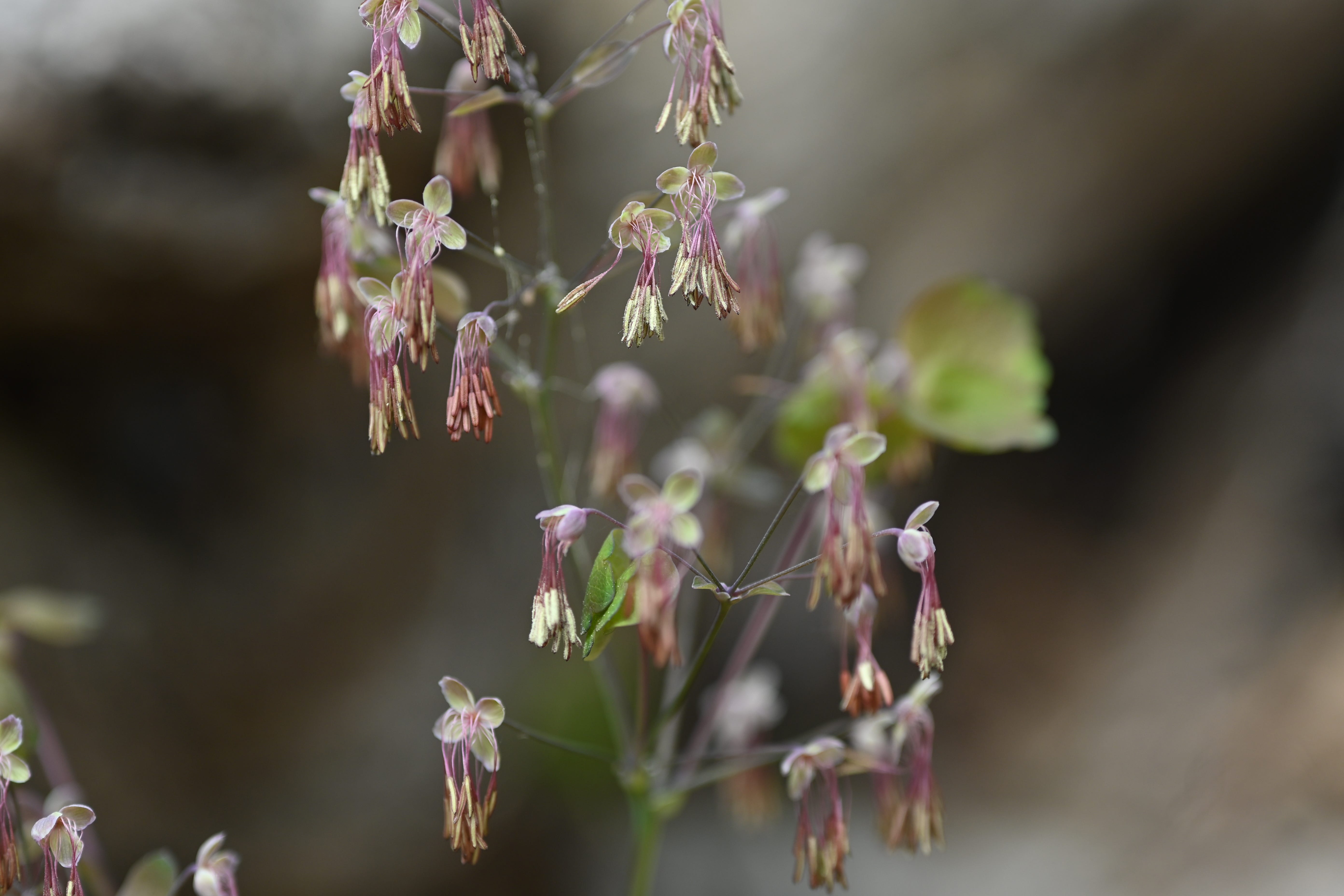
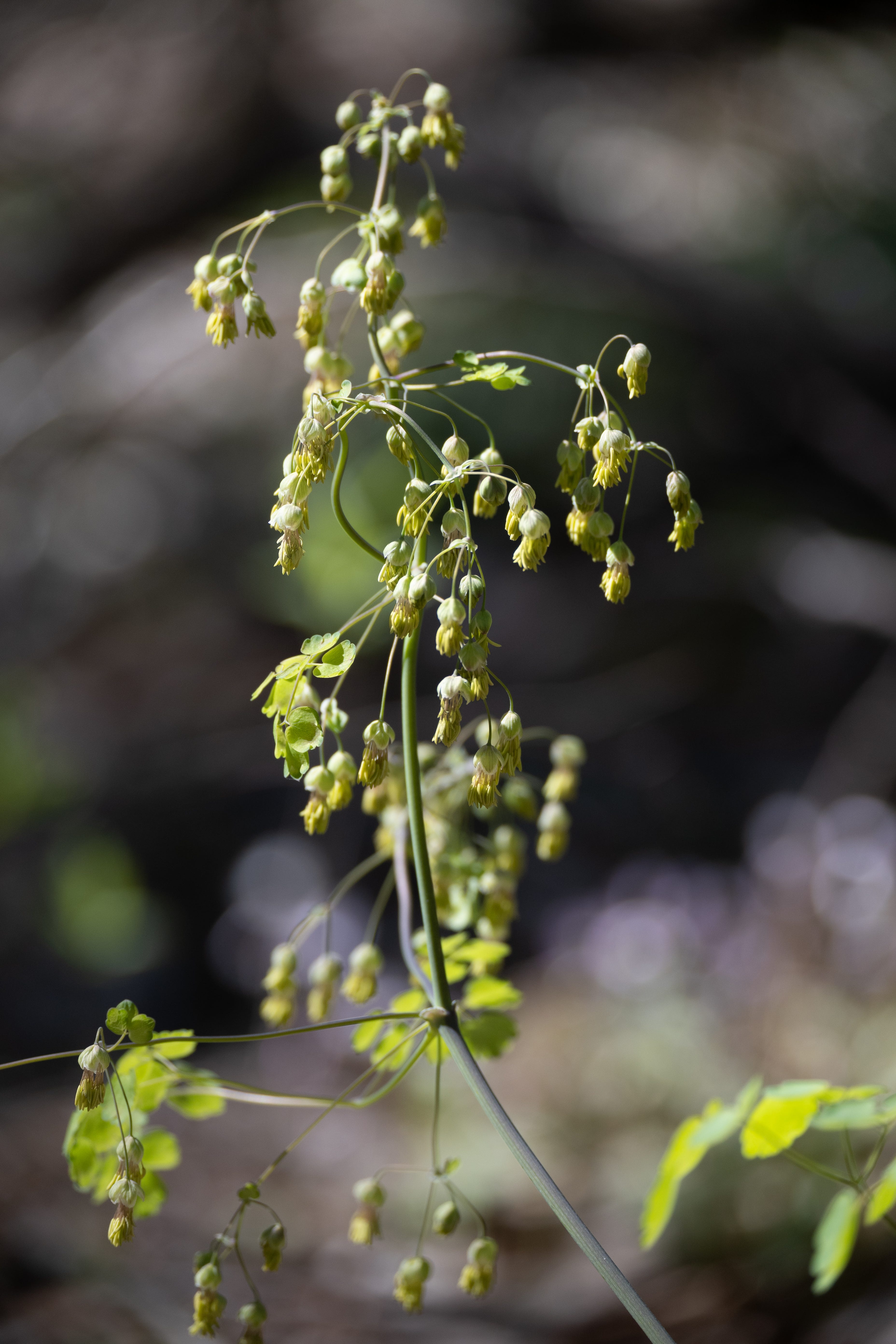
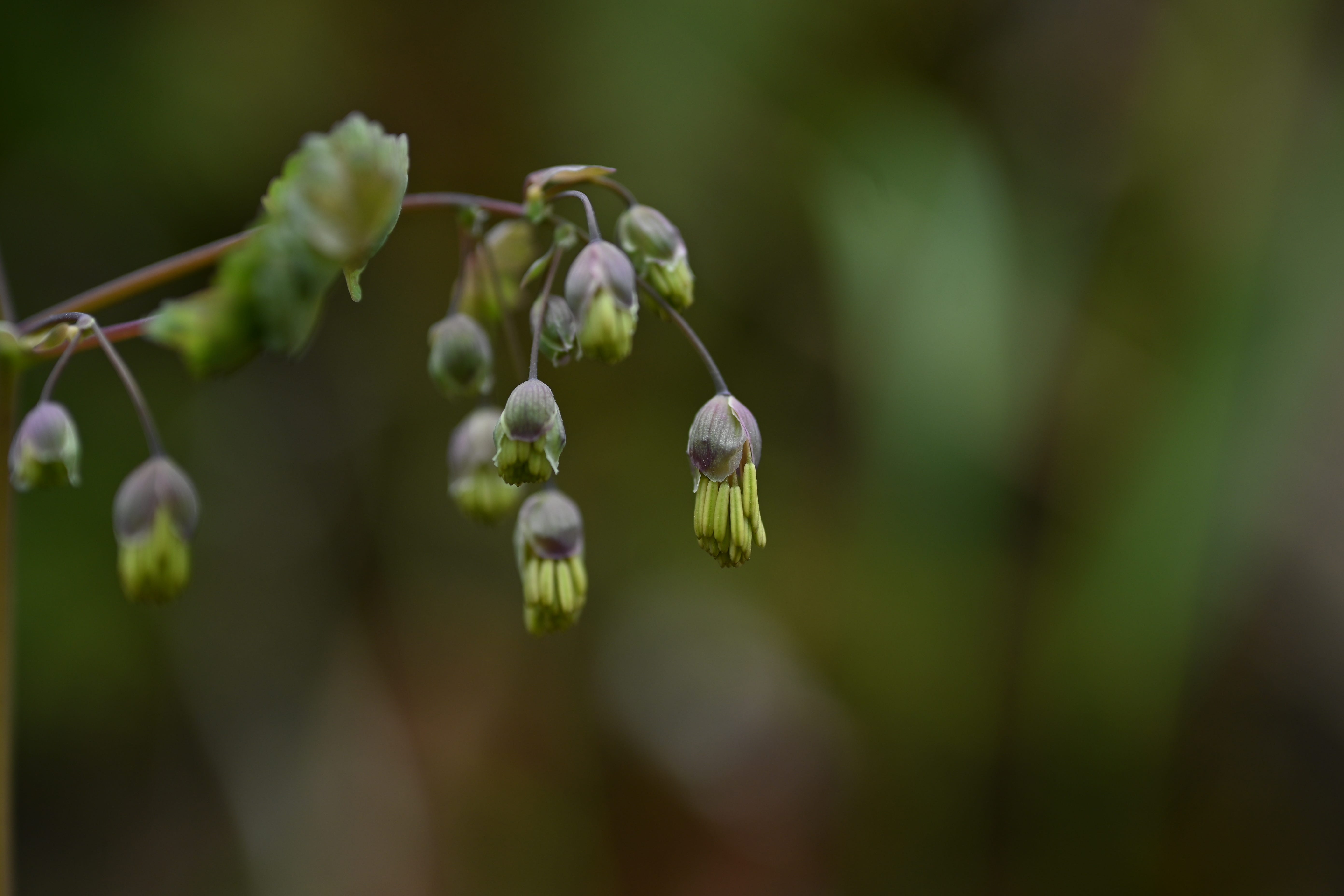
If you squat down and look closely at a male Thalictrum dioicum, you’ll see the tiny stamens, comprised of pollen-coated anthers dangling from thin filaments. You barely have to breathe on them and they jostle delicately, like wind chimes. And like wind chimes, they’re meant to: Early Meadow Rue is wind-pollinated, requiring a little breeze to carry their pollen from a male plant to a nearby female plant. My guess is that the stamens gently bumping into each other serves a purpose: when the wind blows and the anthers bump, pollen is dislodged and floats away.
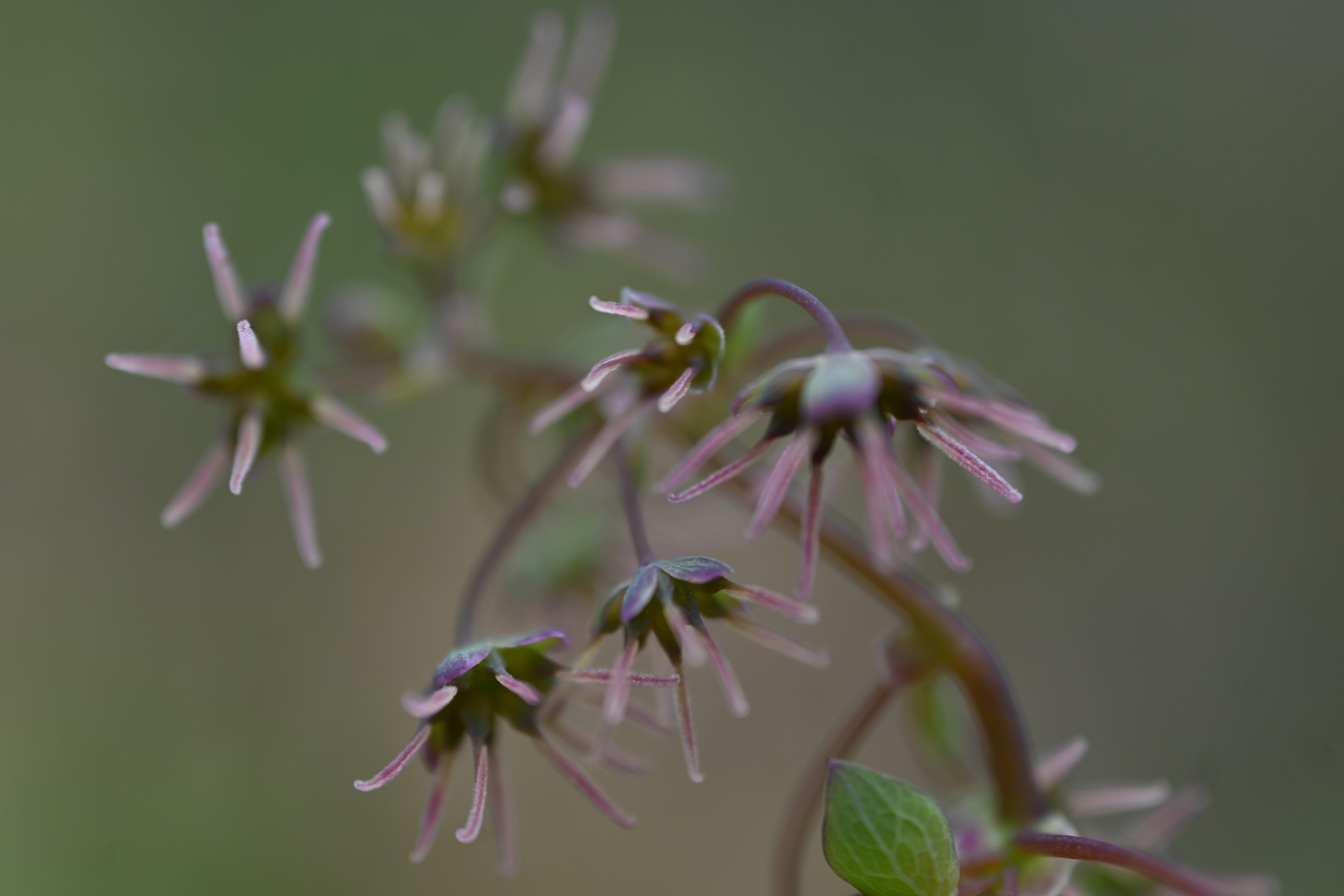
Make sure you find a female plant to look at, too. Notice the way their velvety pistils reach out in many directions. Again, makes sense when you think about it— if they’re trying to catch pollen from the air as it blows past them, having a single receptive point of contact isn’t a great bet. Not only does Early Meadow Rue have many pistils, but the the receptive part of their pistil (the stigma), extends down the side of the style. This is unusual— most of the time, the stigma is at the tip of the pistil, at the very end of the style. All plants in the genus Thalictrum exhibit this elongated stigma.
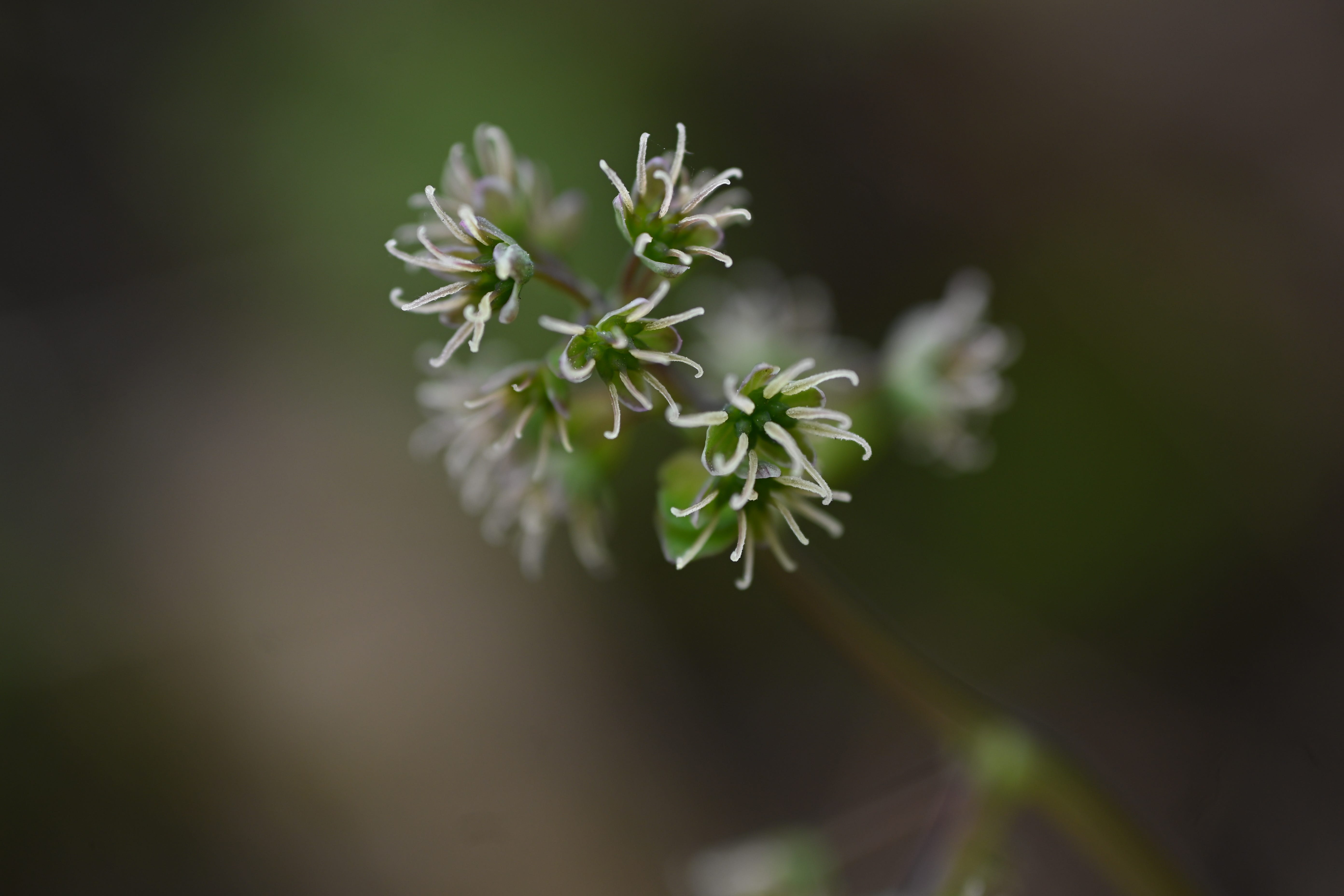
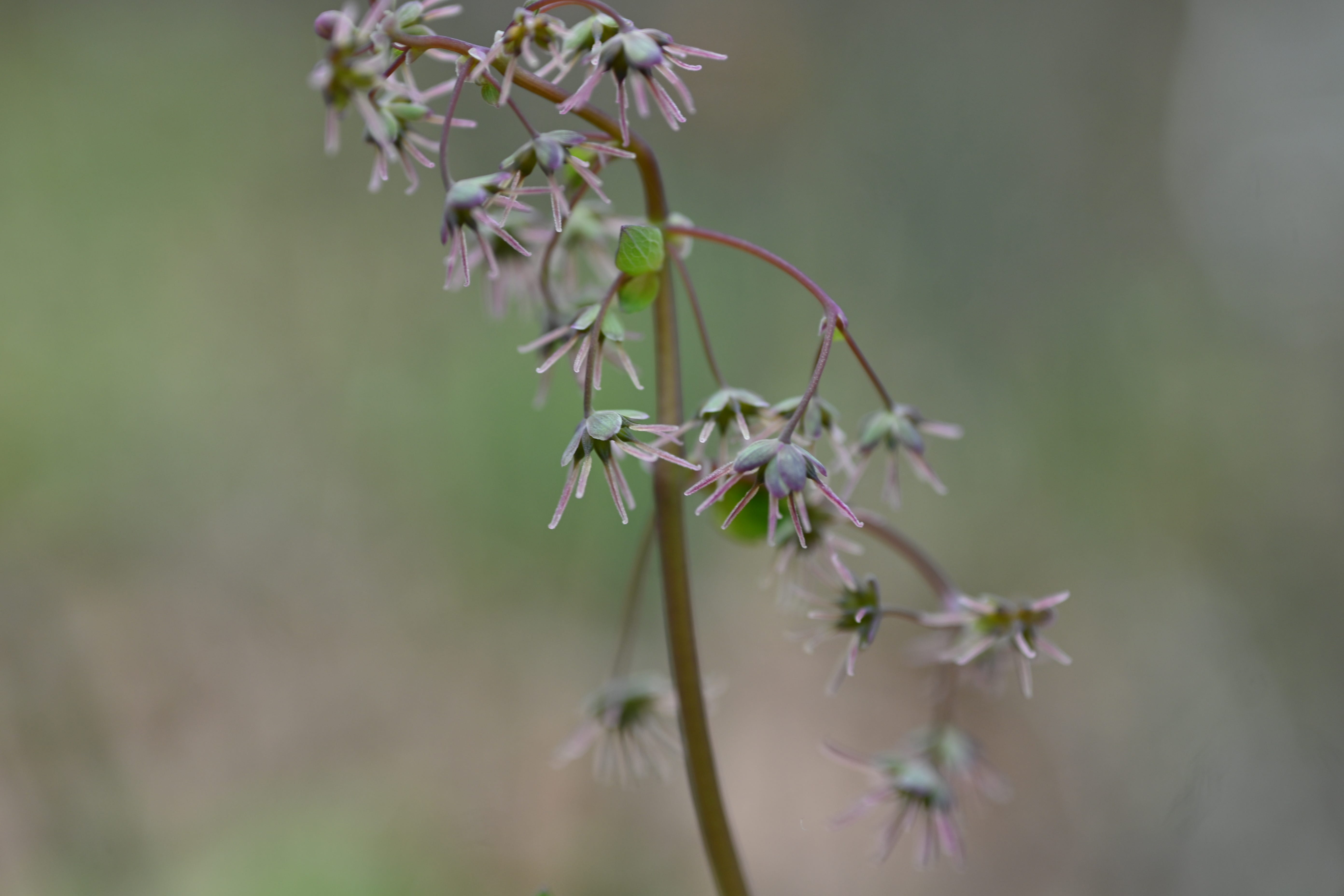
Because Early Meadow Rue does not rely on insect pollination, it doesn’t need to produce nectar. And because the flowers lack nectar, you won’t often see pollinators visiting them. Early Meadow Rue is a host plant to a variety of caterpillars though, and some bees and flies may still be attracted to the pollen on the male flowers.
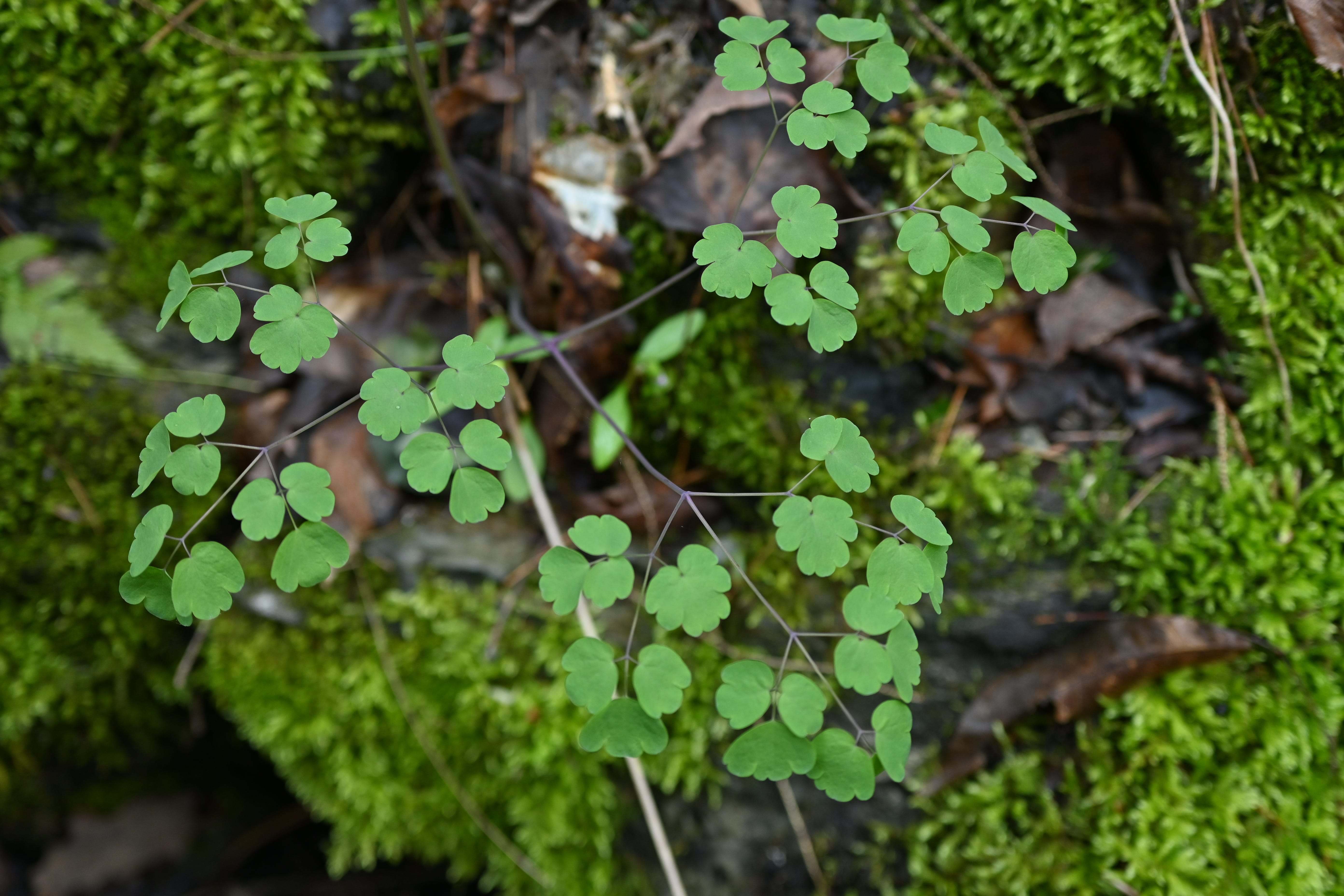
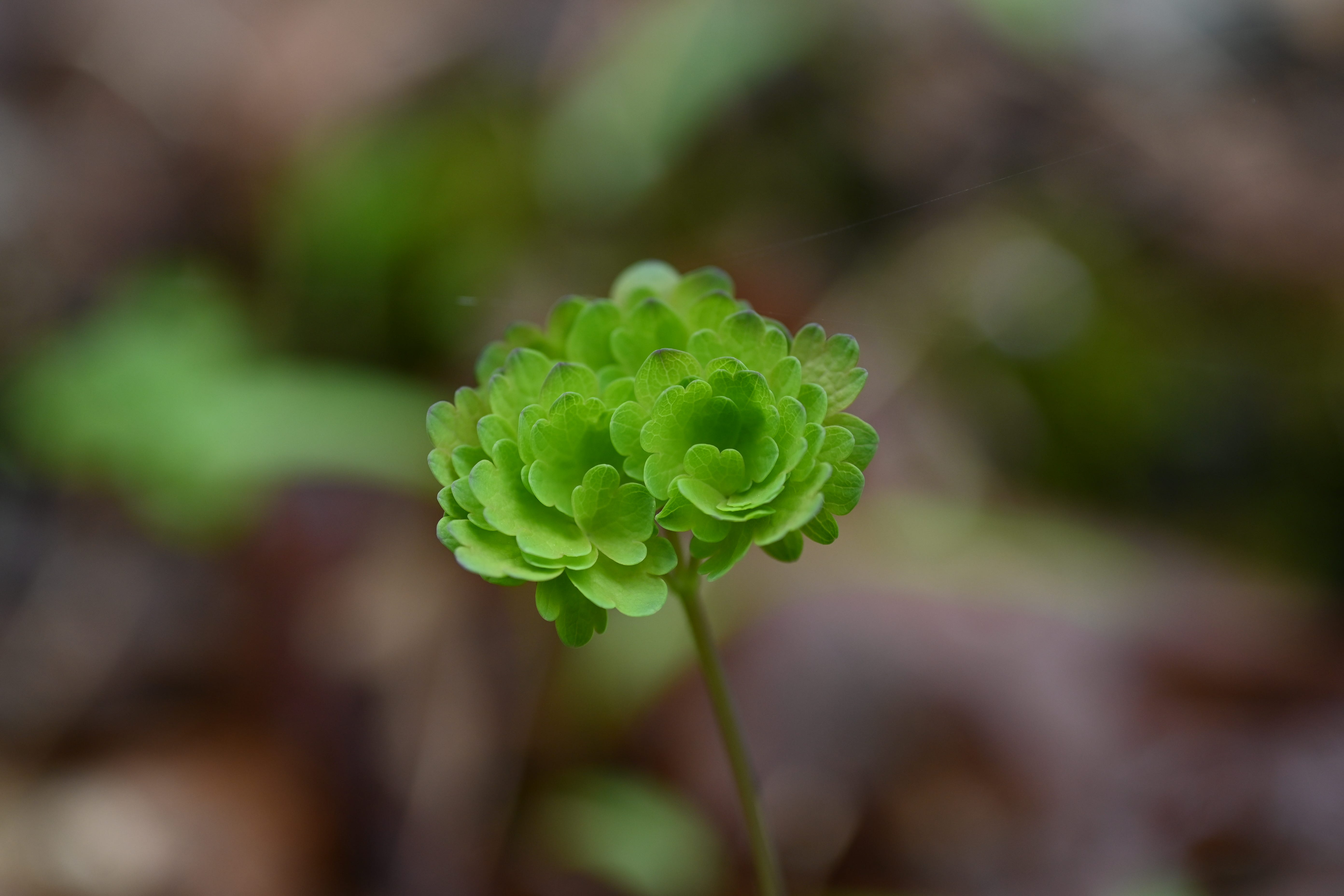
So next time you’re oohing and ahhing over a glorious patch of white trillium, or basking in a glowing grove of yellow trout lily, look around for the distinct leaves and less conspicuous flowers of Thalictrum dioicum. Watch as they chime their silent music, bravely surrendering their invisible pollen grains to the whims of the wind.
All illustrations and photos are my own.
Note: This is the tenth in a series of posts on spring ephemeral wildflowers.
Previous posts:
Subscribe to get a wildflower in your inbox 1-2 times a week from now through May.